Traffic Sign Production
A Comprehensive Guide to Using CWT Flatbed Applicators
The production of traffic and road signs is a critical component of modern infrastructure, requiring precision, durability, and adherence to industry standards. Over recent years, advancements in digital printing and flatbed applicator technologies have transformed the manufacturing process, offering unprecedented levels of efficiency and quality control. This guide explores the benefits and applications of CWT flatbed applicators in traffic sign manufacturing, detailing how these tools streamline production and ensure high-quality output.

Traffic sign applications
Flatbed applicator workflow for traffic sign manufacturing
CWT Flatbed Applicators support the finishing steps used in modern traffic sign manufacturing. From reflective sheeting application to panel preparation, the flatbed applicator becomes a reliable workstation for controlled, repeatable production.
Designed for traffic sign production environments, the system helps you handle large panels safely, position materials accurately and maintain consistent quality across production runs.
Want the bigger picture? Read about the traffic sign manufacturing workflow below.
Traffic sign formats supported
CWT Flatbed Applicators are used in the finishing workflow for a wide range of road and traffic sign formats, including:
- Regulatory signs
- Warning signs
- Guide signs
- Directional and destination signs
- Highway signs and route signs
- Temporary traffic control signs
- Street name signs
- Parking and information signs
- Large-format guide and directional panels
- Commercial and wayfinding signs in public environments
Apply reflective sheeting to sign panels
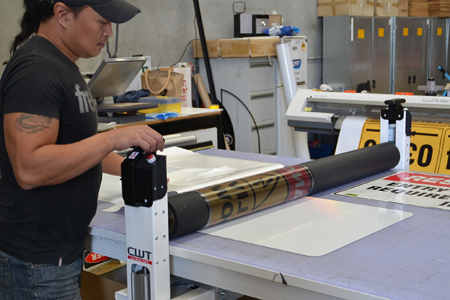
Applying reflective sheeting to aluminium panels is one of the most critical steps in traffic sign manufacturing. A flatbed applicator provides a stable work surface and controlled movement that make it easier to align materials and achieve consistent application results.
This reduces the risk of bubbles, wrinkles and misalignment while improving ergonomics when handling large traffic signs.
Laminate overlay film and protective layers
Traffic sign production often includes lamination of overlay films and protective layers. A flatbed applicator helps you laminate these materials in a controlled and repeatable way.
By improving alignment and contact between materials, you can maintain consistent quality across different sign sizes and production batches.
Mount digitally printed reflective graphics
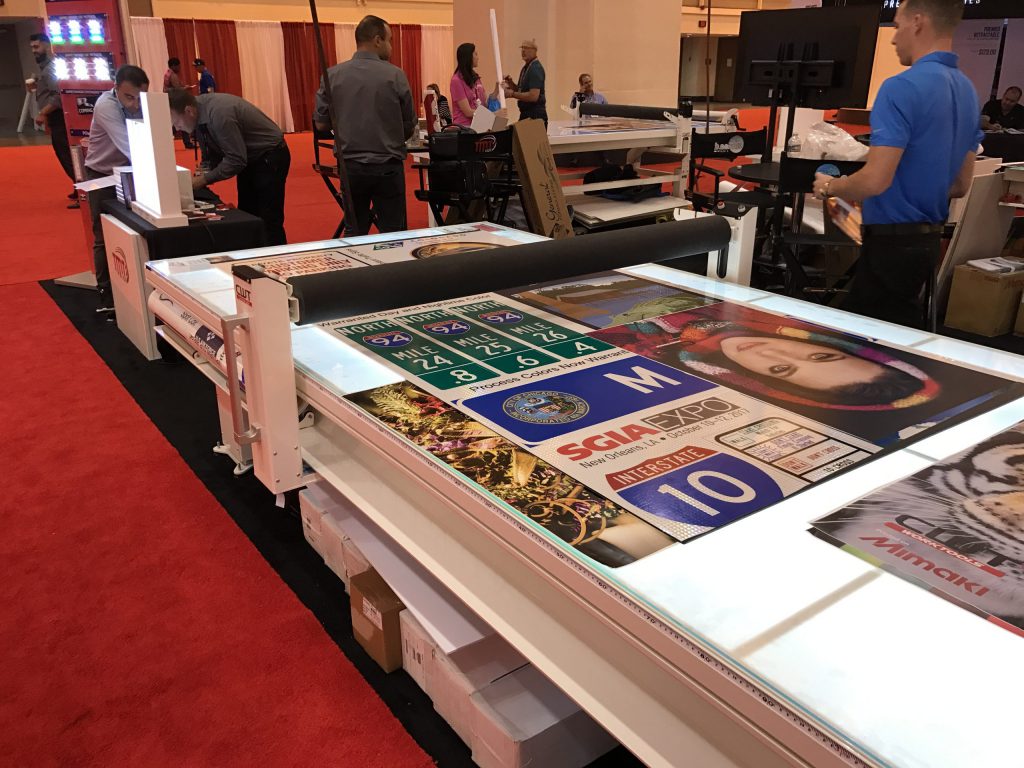
As traffic sign manufacturing becomes more digital, flatbed applicators support mounting of digitally printed reflective sheeting onto sign panels. The workstation setup allows precise positioning before application and helps maintain consistent results across operators and jobs.
This workflow supports both regulatory signs and large guide signs.
Transfer tape application and panel preparation
Flatbed applicators are also used for transfer tape application, trimming and preparation of traffic sign panels before final assembly. Bringing these steps together in one workstation helps streamline finishing operations and reduce unnecessary material handling.
The result is a more organised and predictable traffic sign production workflow.
Built for traffic sign production workflows
Traffic sign manufacturing involves large materials, repetitive processes and strict quality requirements. A flatbed applicator helps create a controlled workstation where reflective sheeting, overlay film and graphics are applied with consistent results.
CWT Flatbed Applicators are designed and manufactured in Sweden to support reliable daily production in professional traffic sign manufacturing environments.
Want to streamline these traffic sign finishing steps in your shop? Contact us, and we’ll help you match the right flatbed applicator setup to your panel sizes, materials and daily workflow.
Contact us

Magnus Haugerud
magnus.haugerud@cwtworktools.comThe evolution of traffic sign manufacturing
Learn more about the evolution of traffic sign manufacturing.